
Wireless Mass Concrete Temperature Monitoring
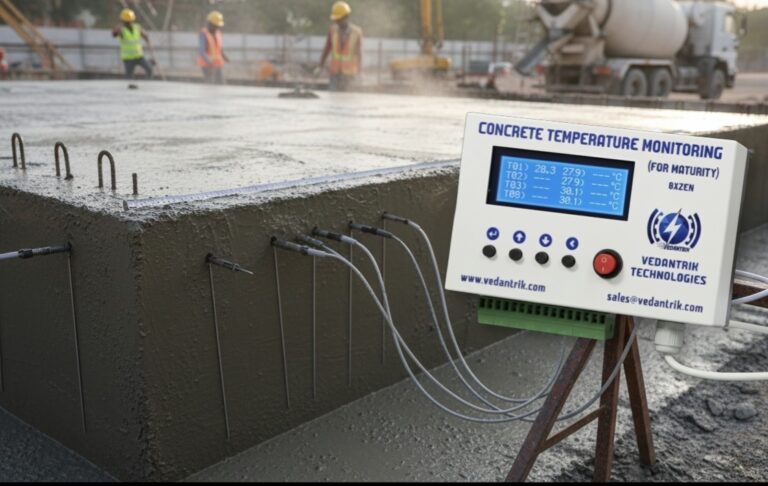
Mass concrete structures, including dams, large foundations, and thick slabs, face a critical challenge during curing: heat generation from hydration. Uneven temperature distribution can cause cracks and compromise structural integrity. Wireless mass concrete temperature monitoring systems provide a modern, efficient way to track temperature in real-time, ensuring durability and long-term safety.
Why Temperature Monitoring Matters
Concrete hydration is an exothermic process. In large volumes, the internal core can heat up much faster than the surface, leading to thermal stress. Cracks from this imbalance can reduce strength, increase maintenance costs, and even compromise safety. Monitoring temperatures allows engineers to implement measures such as cooling pipes, insulating blankets, or delayed pouring schedules to manage these risks.
How Wireless Monitoring Works
Sensor Placement and Design
Sensors are embedded at strategic locations, typically in the core, mid-depth, and near the surface. Proper placement ensures accurate measurement of temperature gradients, allowing engineers to understand how heat is distributed throughout the mass.
Wireless Data Transmission
Modern sensors use LoRa, Bluetooth, or Wi-Fi for real-time data transmission to cloud platforms. Engineers can access dashboards to monitor temperature trends, set threshold alerts, and make informed decisions remotely without onsite presence.
Advantages of Wireless Systems
- Reduced Labor and Installation Time: No complex wiring means faster setup and fewer human errors.
- Safety: Reduces the need for personnel in high-risk areas.
- Remote Monitoring: Access data across multiple sites simultaneously.
- Integration with Cooling Systems: Data can control automated cooling or heating systems to maintain uniform temperature.
Advanced Features in 2025
- Predictive Analytics: Forecast potential cracking and suggest corrective measures.
- Durable Sensors: Designed for wet, alkaline, and harsh environments.
- Cloud Integration: Enables reporting, record-keeping, and collaboration across teams.
- Long Battery Life: Sensors can function for months without maintenance.
Applications
Wireless temperature monitoring is essential in:
- Large dams and hydroelectric projects
- Thick foundation slabs in high-rise buildings
Industrial plants and infrastructure requiring large-volume concrete pours
Case Study Example
For example, in the construction of a major dam, engineers embedded 50 wireless sensors across various sections. By monitoring temperatures continuously, they identified hotspots in the core, triggered localized cooling, and prevented cracking, saving costs and improving structural longevity.
Conclusion
Wireless mass concrete temperature monitoring is not just a technological upgrade—it’s a necessity for modern construction. Real-time monitoring, predictive analytics, and integration with automated systems ensure structural integrity, safety, and efficiency, aligning with the best practices of 2025 construction.